


IQ Test: Logic Brain Training
4.6296.00 Reviews
App Specs
- Version
- 2.22
- Updated On
- License
- Free
- Downloads
- 1,000,000+
- Developer
- Trasco studio
- Categories
- Trivia
- Platform
- Android, iOS
Screenshots
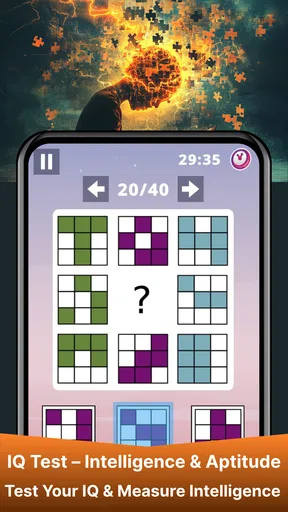
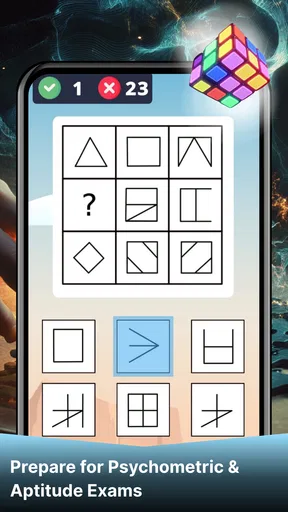
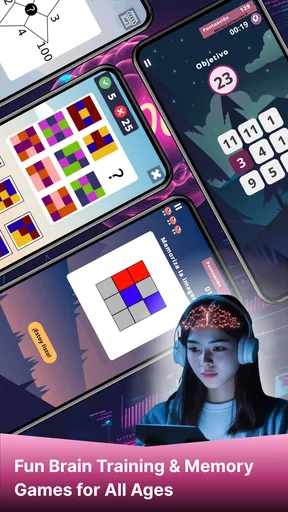
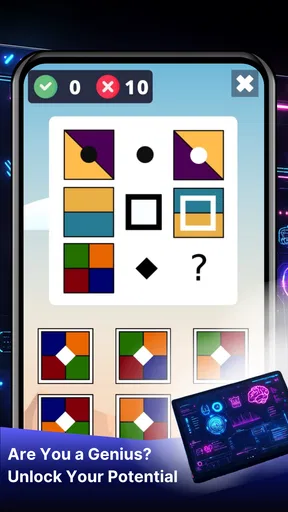
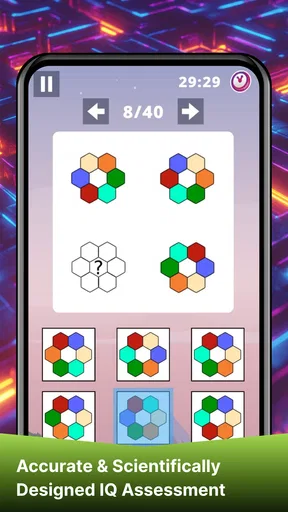
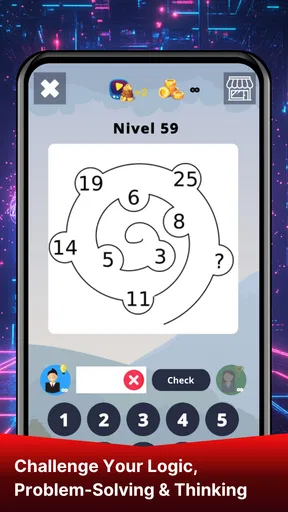

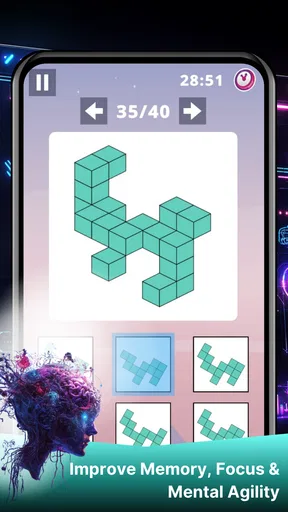
 Analysis by AppCompare
I first reached for IQ Test: Logic Brain Training in the sort of spare moment that usually disappears into scrolling: a short wait with nothing useful to do. Its appeal is immediate. I could get into a puzzle without committing to a long session, and the mix of visual and number-based challenges gave me a reason to pause and think rather than simply tap through. That quick first-week novelty is real, though I think the more important question is whether it can become a pleasant habit once the initial curiosity wears off.
A quick start, with a few expectations to set
The game is a free trivia title from Trasco studio, aimed at people who enjoy logic questions and mental puzzles. It has a 4.4 average from around 34,000 ratings and more than a million installs, so it has found a sizable audience. It is rated for Everyone, and its short label, “IQ Test,” makes the basic premise clear: expect puzzles to solve, not a course in psychology or a formal assessment of intelligence.
That distinction matters. I’d treat any score or performance feedback as a snapshot of how I handled those particular challenges, not as a definitive measure of my intelligence. Puzzle results can reflect familiarity with a format, patience, and how carefully I read a question as much as anything else. For me, the useful goal is noticing how I approach a problem and enjoying the process—not chasing a number as if it were a clinical result.
The first session is easy to enter because the game moves into challenges without a long onboarding sequence. I liked that when I had only a few minutes. At the same time, a fast start means I had to learn the rhythm by doing: slow down enough to understand what a puzzle is asking before guessing. If you tend to rush through a screen, a deliberate first attempt is more useful than trying to beat your own pace immediately.
First Impressions and Getting Started
The first thing I noticed about IQ Test: Logic Brain Training is its sleek and user-friendly interface. Honestly, I’ve tried a bunch of brain training apps, and let’s just say they don’t always get the design part right. But this one? It’s smooth sailing right from the get-go. The colors are easy on the eyes, and the navigation is pretty intuitive.
Once you dive in, the app doesn’t waste time with lengthy tutorials. Instead, it gets you right into the action, which I definitely appreciated. Who has time for endless instructions, right? You get a series of challenges that range from visual puzzles to numeric patterns, all designed to test your mental agility.
Challenging Your Mind
This app isn’t just about throwing random puzzles at you. It’s structured in a way that actually helps you learn and grow. The levels start easy, but don't get too comfortable. Things ramp up pretty quickly, and you'll find yourself scratching your head more often than not.
Worth Reading Before You Choose

Flipboard Shows What News Apps Must Do Beyond the Feed

Switching to Android Auto Means Rethinking Your Driving Routine

Google Calendar Makes a Crowded Week Easier to Manage

Ludo King Makes the Most of the Minutes Between Plans

Baby Panda World Brings Quick Play to Modern Phones, but Its Game Library Feels Busy

ESPN’s Live Game View Makes Following Close Games Easier
What I really liked is how the app tracks your progress. It gives you a detailed breakdown of your performance, so you can see which areas you're acing and which ones need a bit more work. It’s like having a personal brain trainer in your pocket.
Features That Stand Out
One of my favorite features is the daily challenge. Every day, the app offers a new puzzle that keeps things fresh and exciting. It’s a great way to start your day with a little mental jolt!
And if you’re the competitive type, there's a leaderboard where you can see how you stack up against other players. Trust me, nothing gets your brain gears turning faster than a little friendly competition.
The app also provides insightful feedback after each test, which is super helpful. It’s not just about telling you what’s right or wrong but also explaining the logic behind the correct answers. This is a fantastic way to actually improve your cognitive skills over time.
Making the habit stick
The daily puzzle is the easiest route to recurring use because it gives a session a natural boundary. I’d use it as a small break rather than a new obligation: solve the challenge when I have a spare moment, then leave the game until I genuinely want another round. A routine tied to an existing pause—waiting for tea, sitting on a train, or taking a screen break—feels more sustainable than promising myself a long practice session every day.
Progress tracking can also make repeat visits more intentional. Instead of only checking whether a result went up, I’d look for the kinds of questions that repeatedly slow me down. If number patterns are comfortable but visual puzzles take longer, that’s a practical cue to give those questions more attention. The useful habit is reviewing how I reasoned, not treating every session like a test I must win.
There is a trade-off here: tracking and a leaderboard can encourage consistency, but they can also turn a relaxing puzzle into a performance task. I’d ignore the rankings if they make me rush or compare myself with people whose experience I know nothing about. The game works best for me when the score is feedback, not the reason I opened it.
Where it fits in an ordinary day
Picture a short wait before an appointment. I can open the game, attempt a puzzle, and put my phone away when my turn arrives. That is a better fit than a sprawling game that expects a long uninterrupted session, and it gives a small idle moment a clear activity. On a quieter evening, I might spend longer exploring the challenges, but I wouldn’t rely on it as a substitute for a full-length game or a structured study plan.
It can also work as a low-pressure activity with a friend or family member: compare how you interpret a puzzle, then discuss the explanation after answering. I’d keep the comparison playful. Different people may spot a pattern in different ways, and a leaderboard position is not a meaningful judgment of anyone’s general ability. The conversation about the reasoning can be more enjoyable than the result.
For someone choosing between this and a conventional trivia quiz, the distinction is the kind of thinking each invites. General-knowledge games tend to reward what you already know; these logic and number challenges ask you to infer a rule from what is on the screen. That makes this a better pick when I want to work through a problem rather than recall facts. If I’m in the mood for history, pop culture, or a broad quiz with friends, a trivia-first alternative would suit me better.
What can wear thin over time
Even a varied puzzle game can start to feel familiar once I recognize the ways its questions are framed. When that happens, I try not to turn every answer into a race. Reading the prompt twice, explaining the pattern to myself, and checking the feedback after a mistake makes a repeated format more worthwhile. If I’m simply tapping quickly because I’ve seen something similar, I’m no longer getting much from the session.
The leaderboard is another feature that depends on the player. Some people will enjoy having a visible target; others may find that it shifts attention away from the puzzles. I’d use it only if friendly comparison makes me more curious, not if it makes a personal break feel like a competition I have to keep up with.
There is also a limit to what puzzle feedback can do. An explanation can help me understand why a particular answer follows from a pattern, but that is not the same as proving a broad improvement in everyday reasoning. I’d judge the game by whether it gives me engaging problems and helps me notice my own habits, rather than expecting it to deliver measurable real-world results.
Who will get the most from it
I’d recommend it to casual puzzle fans, people who like spotting patterns, and anyone who wants a compact activity for waiting rooms or quiet breaks. It is especially suitable if you enjoy being challenged without needing a story, a large setup, or a long session. Younger players can also find the format approachable, while the Everyone age rating reflects its general-audience positioning.
I’d skip it if I wanted a rigorous IQ assessment, detailed teaching in mathematics, or a multiplayer trivia night built around shared rounds. It is also not the best fit for someone who dislikes being scored or would rather relax without solving problems. In those cases, a book of puzzles, a dedicated learning resource, or a more social quiz game may meet the need better.
There is no need to buy anything just to decide whether the style suits you: the game is free to start, with in-app purchases ranging from about fifty cents to around four dollars and fifty cents per item. I’d begin with the free experience and only consider spending if I knew exactly what I wanted from an optional purchase. The game runs on Android 6.0 or later, and version 2.19 is the current release.
Is It Worth Your Time?
Now, let’s talk about the million-dollar question: should you invest your precious time in this app? In my humble opinion, if you're someone who enjoys a good mental challenge, then absolutely. IQ Test: Logic Brain Training offers a fun and engaging way to keep your mind sharp.
The variety of puzzles ensures that things never get boring, and the tracking features mean you’re not just spinning your wheels—you’re actually making progress. Plus, it’s a great way to unwind while still feeling productive.
However, if you’re looking for an app that provides quick answers or instant gratification, you might want to look elsewhere. This app is more about the journey than the destination, if you catch my drift.
All in all, I’d say give it a shot. It’s free to download, so you’ve really got nothing to lose. And who knows? You might just end up discovering a new favorite way to spend your downtime.
Ready to put your brain to the test? You can find IQ Test: Logic Brain Training available for download on both Android and iOS platforms. Dive in and see how high you can score!
My long-term verdict
For lasting value, I’d call this a good small habit rather than a game I’d expect to occupy every evening. Its strongest case is the combination of short puzzles, a recurring daily challenge, and feedback that gives me something to reflect on after answering. Those elements can keep it useful after the first burst of curiosity, provided I enjoy the format and don’t make a score the sole measure of success.
The main maintenance burden is simply remembering to open it and keeping the activity enjoyable. I wouldn’t build a strict streak routine around it; missing a day should not make a casual brain game feel like a chore. A few thoughtful sessions when I want a mental change of pace are more valuable to me than repetitive play done only to maintain a habit.
Released in July 2022, this trivia game has had time to find an audience, but its lasting appeal still comes down to whether its particular puzzle style clicks with you. I’d keep it installed if I wanted an easy source of short logic challenges and liked checking explanations. If I started recognizing every format and answering on autopilot, I’d take a break or switch to a different kind of puzzle rather than forcing myself to keep playing.
Pros
- Engaging puzzles boost cognitive skills.
- User-friendly interface enhances navigation.
- Variety of levels keeps it challenging.
- Tracks progress to monitor improvement.
- Offline mode allows play anytime.
Cons
- Ads can be intrusive during gameplay.
- Limited hints without in-app purchases.
- Repetitive puzzles in later levels.
- Occasional app crashes disrupt experience.
- No multiplayer or social features.
FAQs for IQ Test: Logic Brain Training
What is the primary purpose of the IQ Test: Logic Brain Training app?
The IQ Test: Logic Brain Training app is designed to challenge and enhance your cognitive abilities through a series of logic puzzles and brain games. It aims to improve problem-solving skills, critical thinking, and mental agility. Users can track their progress and see improvements over time, making it both educational and entertaining.
How user-friendly is the interface of the IQ Test: Logic Brain Training app?
The app features a clean and intuitive interface, making it accessible to users of all ages. The navigation is straightforward, with clear instructions for each puzzle and test. The design focuses on simplicity to ensure that users can fully concentrate on solving the brain challenges without unnecessary distractions.
Does the IQ Test: Logic Brain Training app offer different levels of difficulty?
Yes, the app offers various levels of difficulty to accommodate users with different skill levels. Whether you are a beginner or an experienced puzzle solver, the app provides challenges that can be adjusted according to your proficiency. This ensures that users remain engaged and continuously challenged.
Is an internet connection required to use the IQ Test: Logic Brain Training app?
An internet connection is not required for the core functionality of the app, allowing users to enjoy puzzles and brain challenges offline. However, some features such as leaderboards and updates may require connectivity. This offline capability makes it convenient for use anytime and anywhere.
Are there any in-app purchases or ads in the IQ Test: Logic Brain Training app?
The app may include in-app purchases that provide additional content or features, such as advanced puzzles or ad removal. Users may encounter ads in the free version; however, these are generally non-intrusive. The app aims to provide a seamless user experience while offering opportunities for enhanced gameplay.


